






We handle storm damage restoration across Vancouver, WA, responding when high winds, heavy rain, and sudden weather shifts impact your property. Storms can damage roofing, siding, and structural areas while allowing water to enter and spread quickly. What starts outside often turns into interior damage if it’s not addressed right away.
Our process focuses on securing the property, removing debris, drying affected areas, and repairing the damage properly. We work through each step with a clear plan so nothing gets missed, restoring your home or business to a safe and stable condition without unnecessary delays.
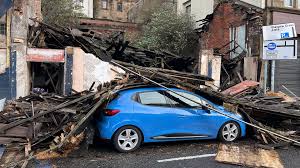
Board up and roof tarping go in before any cleanup begins. A building envelope left open during post-storm rain events multiplies interior damage with every rain event that follows.
Storm driven water enters through roof damage, broken windows, and compromised siding. We extract standing water, dry structural assemblies, and stop secondary moisture damage before it spreads further inside.
Fallen trees, broken materials, and structural debris create hazards that block the full damage assessment. We remove debris safely and document the scope before any structural repair work begins.
Ethos handles storm damage from emergency securing through completed structural repair. No handoff between separate crews while the property sits exposed between trades.
Not every storm leaves the same damage. Clark County faces specific damage patterns from Pacific Northwest wind events, atmospheric river systems, and freeze thaw cycles that create structural failure without the dramatic visual cues of a direct strike. These are the situations that cannot wait for a scheduled appointment.
Any situation where the building envelope is open to outside elements is a time-sensitive emergency. Every storm system that follows adds to the interior damage already present.
A storm that breaches the building envelope does not stop damaging the structure when the wind and rain stop. Wind-driven rain that entered through roof damage saturates insulation and drywall framing before the storm ends. In Vancouver, WA’s consistently damp climate, those materials do not dry passively. Mold establishes inside saturated wall cavities and ceiling assemblies within 24 to 48 hours under Pacific Northwest conditions.
Structural damage compounds when water infiltration goes unaddressed. Wet framing loses strength progressively. Saturated insulation collapses and holds moisture against wood members for weeks. Pooled water beneath the flooring causes adhesive failure and subfloor deterioration. A storm that caused roof damage and water intrusion becomes a mold and structural repair problem within days if the building envelope stays unsecured and interior drying does not begin immediately.
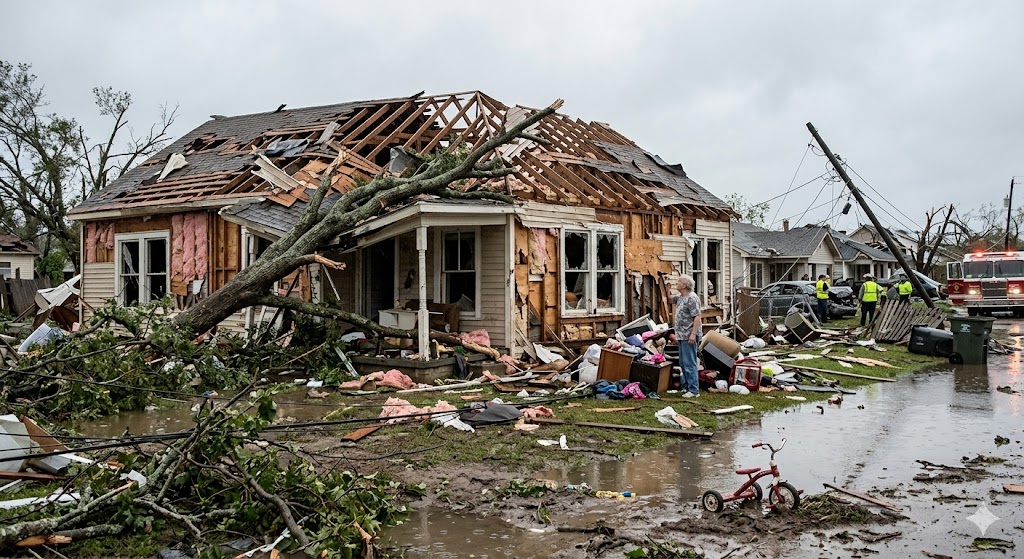
The first action on every storm damage call is securing the property against further damage. Emergency roof tarping and board-up stop ongoing water intrusion before assessment and cleanup begin. A compromised building envelope left open during post-storm rain events multiplies the interior damage with every hour it stays unprotected.
Full cleanup and repair follow in a confirmed sequence. Debris removal and damage documentation come first. Water extraction and structural drying run alongside the full damage assessment. Once the structure is secured and dry, permanent repairs begin. Roof repair, window replacement, structural work, drywall, and flooring are all handled under one process, so no gap exists between trades while the property waits exposed.
Ethos Water Damage of Vancouver handles storm damage cleanup and repair for every property type across Vancouver, WA, and Clark County. Single-family homes with roof damage from wind events. Condos and multi-unit buildings where exterior damage to a shared envelope affects multiple residents simultaneously. Commercial properties where storm-related closure means operational loss on top of structural damage. Older Vancouver, WA homes in established neighborhoods with aging rooflines are more vulnerable to high-wind uplift. Same response standard across every property type.
Vancouver, WA homes in neighborhoods like Hazel Dell, Orchards, and Felida face direct exposure to Clark County wind events and atmospheric river rainfall. Roof damage is the most common storm entry point in residential properties. Ethos Water Damage of Vancouver responds with emergency tarping, water extraction, full structural drying, damage documentation for insurance, and permanent repairs covering roof, walls, ceilings, and any structural elements the storm affected.
Storm damage to a shared building exterior sends water into multiple units simultaneously. A lifted roof section or failed exterior wall above one unit affects every resident below it. Ethos coordinates storm damage cleanup and repair across affected units in Vancouver, WA, multi-unit properties, working with property management to document each unit’s damage separately and restore every impacted space. Each owner receives documentation that supports their individual insurance claim.
A storm event that damages a commercial property in Vancouver, WA, creates structural damage and forced closure at the same time. Ethos responds to commercial storm damage with resources scaled to the size of the loss, secures the building immediately, documents the full scope for commercial insurance, and executes cleanup and repair efficiently to reduce the closure period to what the restoration actually requires rather than what poor coordination extends it to.
Established Vancouver, WA neighborhoods carry older housing stock with original rooflines, aged flashing, and wood framing that has accumulated decades of seasonal exposure. High-wind events and sustained atmospheric river rainfall stress these structures more than newer construction. Ethos Water Damage of Vancouver understands the vulnerability patterns in Clark County’s older properties and assesses the full scope of storm damage, including what was weakened before the storm, rather than addressing only what visibly failed during it
Vancouver, WA experiences winter freeze events where ice accumulation on roofs, in gutters, and at flashing points creates damage that appears after the freeze, not during it. Ice dams force water beneath the roof shingles into the attic assembly. Frozen gutters separate from the fascia and allow water to track behind siding. Ethos handles freeze-thaw storm damage throughout Clark County, a damage pattern specific to Pacific Northwest winters that restoration companies without local knowledge frequently misdiagnose as a simple roof leak rather than a structural water intrusion event.
Storm damage that sits without professional response for 24 to 48 hours in Vancouver, WA, stops being a cleanup and repair situation and becomes a cleanup, mold remediation, and structural replacement situation. The math is direct. Roof damage with no tarp allows the next rain event, and in Clark County, there will be a next rain event, to add water damage on top of what the storm already caused.
Insurance claims are also shaped by response timing. Documentation taken immediately after the storm shows exactly what the storm caused. Documentation taken after days of additional deterioration mixes storm damage and neglect-related damage in the same photographs. Adjusters distinguish between the two, and the distinction affects the claim outcome. Ethos Water Damage of Vancouver responds immediately because a fast response limits the damage scope, controls the restoration cost, and produces the cleanest possible documentation of what the storm actually caused versus what developed in the days that followed.
Filing a storm damage insurance claim in Vancouver, WA requires knowing which type of damage your policy actually covers. Standard homeowners insurance covers wind damage, rain intrusion through a storm-compromised roof or windows, and structural damage from falling trees or debris. These are sudden-event losses tied directly to the storm.
Flood damage from rising water, including Columbia River overflow, stormwater runoff, and saturated ground pushing water into crawl spaces or lower levels, is not covered under standard homeowners’ insurance. It requires a separate National Flood Insurance Program policy. Many Vancouver, WA, property owners discover this distinction after a major storm event rather than before it. A Clark County storm that causes both wind damage and ground flooding creates two separate damage types under two separate coverage structures. Ethos documents each damage type clearly, identifying the cause of every affected area so your claim goes to the correct policy. We do not manage claims on your behalf, but the documentation package we produce from first arrival through completed restoration is built to support the process rather than create questions the adjuster has to resolve on their own.
Ethos installs emergency tarping and board-up on arrival. The building envelope closes before any cleanup or assessment begins. The storm is done. The damage stops growing from that point.
Ethos Water Damage of Vancouver is a certified local team. We know Pacific Northwest storm damage patterns, Clark County property types, and what Vancouver, WA winters do to structures over time.
Debris removal, water extraction, structural drying, and permanent repair all handled by one team. No gap between separate contractors while the property sits exposed and the insurance clock runs.
Ethos photographs and documents storm damage before any cleanup begins. Every affected area gets recorded in its immediate post-storm state, the documentation your adjuster needs to assess the claim accurately.
Atmospheric river events cause two types of damage in Clark County. Rain intrusion through wind-damaged roofing or broken windows is covered under standard homeowners’ insurance as a sudden storm event. Water that enters through saturated ground, overflowing drainage, or stormwater runoff is flood damage requiring a separate NFIP policy. Most Vancouver, WA properties affected by atmospheric river events have both types present. Ethos documents the cause of each damage area so the correct coverage applies to each portion of the claim.
An ice dam forms when heat from the living space warms the roof deck, melts snow or ice above it, and refreezes at the colder roof edge or gutter line. The pooled water backs up beneath the shingles and enters the attic assembly. Vancouver, WA freeze events create ice dam conditions in homes with inadequate attic insulation or ventilation. The damage appears as ceiling staining and wet insulation after the thaw, often misread as a roof leak rather than the ice dam intrusion that actually caused it.
Stay out of any area where structural integrity is uncertain. A fallen tree on a roof can compromise the ceiling assembly below it in ways not visible from the living space. Call Ethos Water Damage of Vancouver at (971) 317-8747 immediately. Do not attempt to remove the tree yourself. We secure the opening with emergency tarping to stop water entry, assess the structural condition of the roof and any areas below the impact, and document the full damage scope before any removal begins.
Emergency securing happens the same day. Structural drying after water intrusion takes three to five days with professional equipment running. Permanent repairs follow once drying confirms complete; the timeline depends on the scope of structural work needed. A contained roof leak with limited interior water intrusion may be resolved in one to two weeks. Significant structural damage with extensive water intrusion and mold remediation takes longer. Ethos gives a realistic timeline after the initial assessment, not a pre-arrival estimate.
Yes, and faster than most property owners expect. Water intrusion through storm damaged roofing or broken windows saturates insulation and wall framing during the event. In Vancouver, WA’s damp climate, mold begins to establish inside those saturated materials within 24 to 48 hours. A storm that happened three days ago and was addressed with surface cleanup only may already have active mold growth inside the ceiling assembly or wall cavities where water tracked during the event.
Yes. Siding failure and lifted flashing create water intrusion pathways that direct water into the wall assembly rather than the interior living space. The water enters behind the siding and travels down the wall framing without producing visible interior signs until the assembly is already significantly saturated. Ethos uses professional moisture meters to assess wall assemblies behind damaged siding in Vancouver, WA properties. What the meter reads inside the wall is more reliable than what the interior surface shows.
Yes. Storm damage to detached garages, covered patios, sheds, and outbuildings on Vancouver, WA properties gets documented and assessed as part of the same storm event. Coverage for detached structures varies by policy; most standard homeowners’ policies cover detached structures at a percentage of the main dwelling coverage. Ethos documents damage to every structure on the property affected by the storm, so your adjuster has a complete record across the full loss rather than just the main building.
Cleanup covers debris removal, water extraction, and making the property safe and weather-tight after the storm event. Repair is the permanent structural work that restores the property to pre-storm condition, including roof repair, window replacement, drywall, framing, and finishes. Ethos Water Damage of Vancouver handles both phases under one process. Cleanup and securing happen immediately. Permanent repairs begin once the structure is confirmed dry and the full damage scope is documented. One team takes the property from post-storm emergency through completed restoration.
We provide restoration services throughout Vancouver, WA and surrounding communities like Camas, WA, Battle Ground, WA, Ridgefield, WA, and Portland, OR. Whether you are in the city or a nearby area, our team is ready to respond when property damage happens.
The focus is keeping the process simple and reliable from start to finish. Damage can spread quickly, especially with water and storm issues common in the Vancouver area, so response time and clear communication matter. Every step is handled with attention to detail so nothing gets overlooked.
If you are in Vancouver or any of the nearby areas listed below, you can expect our team to show up on time and get to work restoring your property to a safe and functional condition.